
Knauf Attic Insulation in Paradise: A Homeowner’s Guide
When a manufacturer rep says their product is “perfect for any climate,” that’s marketing. Knauf makes genuinely good fiberglass insulation, and in some Paradise attics it’s exactly the right tool for the job. In others, we’d point you toward a different material from the portfolio. The difference comes down to your attic profile, your budget, and how the product is installed in desert heat. Here’s how to tell which situation you’re in – and why asking that question matters more than brand loyalty.
What Is Knauf Insulation, Exactly?
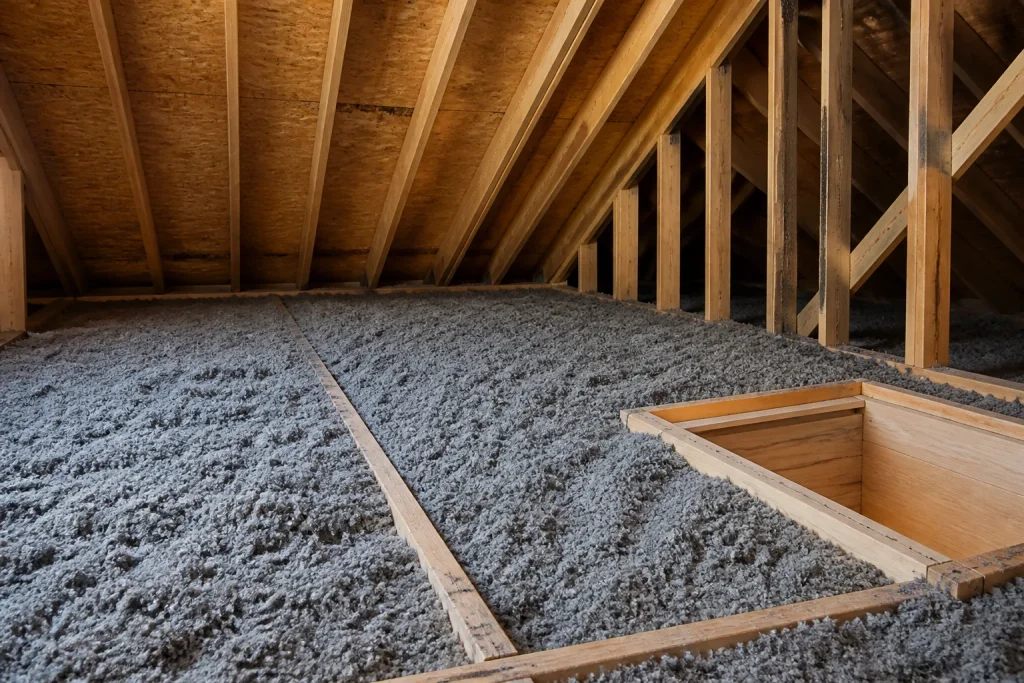
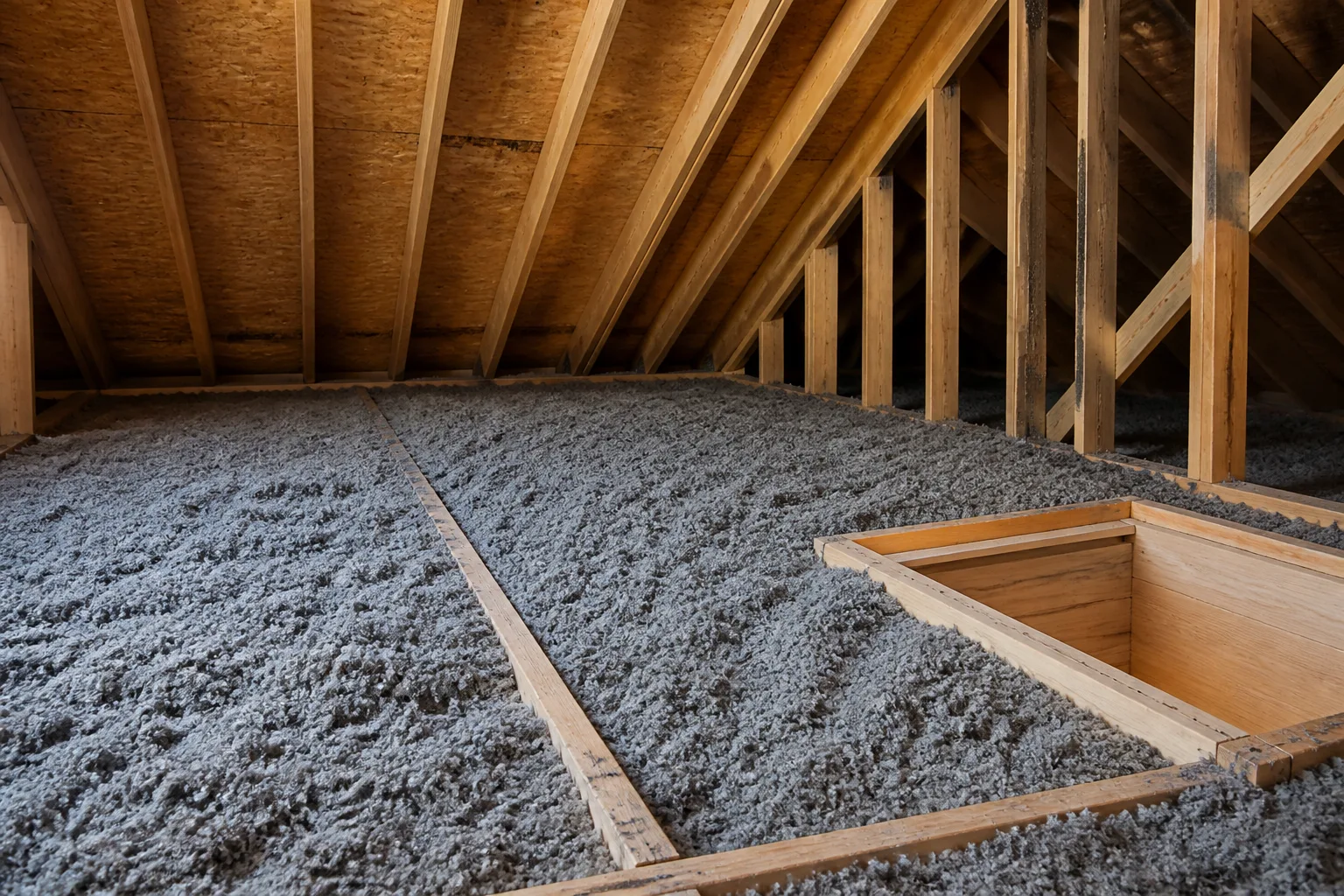
Knauf is a fiberglass manufacturer with a product line that spans the two formats most Paradise homeowners end up choosing between: batts and blown-in loose fill. EcoBatt is their batt line, and it’s made with a formaldehyde-free binder rather than the traditional phenol-formaldehyde chemistry that older fiberglass used. Their blowing wool is a loose-fill fiberglass product installed with a machine, which makes it well-suited to retrofits where you’re covering an existing attic deck or working around obstructions.
The short version of what makes Knauf worth considering:
- Formaldehyde-free binder in EcoBatt, which matters more in tight homes than leaky ones
- Blown fiberglass that resists moisture reasonably well and won’t feed mold the way cellulose can in a wet attic
- Consistent density when properly installed, which is what gets you the rated performance
- Wide availability in the sizes and formats that match standard truss spacing
What Knauf is not: a magic material that fixes an attic problem by itself. The performance you get depends heavily on how the attic is air-sealed and how carefully the product is installed. That’s true of every brand in our lineup, from Attic Insulation Paradise on down the shelf.
Why the Formaldehyde-Free Binder Matters More in a Paradise Home
Here’s the detail most homeowners skip past: the health and indoor-air-quality argument for EcoBatt gets stronger as your house gets tighter. A Paradise home built to modern standards, with sealed windows, house wrap, and a well-seated attic access, doesn’t breathe the way a 1970s house does. Whatever offgasses inside stays inside longer. That’s why we pay attention to binder chemistry here in a way we wouldn’t in a drafty older structure.
Formaldehyde-free doesn’t mean the product is inert. Any fiberglass still needs to be installed with proper ventilation and left undisturbed once it’s in place. But the lower-odor, lower-emission binder does make a noticeable difference in how an attic smells and feels when you open the hatch on a hot afternoon. Homeowners who are sensitive to chemical smells tend to notice it immediately.
In our experience, the formaldehyde-free question comes up most often with families who have young kids or who work from home. It’s a legitimate concern, not a marketing line. If it’s a priority for you, EcoBatt is the fiberglass option we’d point to first.
Blown Fiberglass vs. Cellulose in a Low-Humidity Climate
Paradise’s dry air changes the value calculus. In a humid climate, moisture resistance is a huge differentiator – blown fiberglass handles a damp attic better than cellulose, which can hold water and support mold growth if a roof leak goes unnoticed. Here, humidity is rarely the problem. The problem is settling.
Blown fiberglass will settle over time, and if it’s under-installed or unevenly applied, you lose performance at the top of the attic where heat builds. Cellulose settles too, but at a different rate and with different effects on density. Consider:
- Blown fiberglass (Knauf): resists moisture, drops a little in R-value as it settles, requires accurate depth marking during install
- Cellulose (such as attic insulation options through GreenFiber): denser, settles more, has recycled content, better at resisting air movement in some configurations
- Spray foam: the most airtight option, but a different price point entirely – see our spray foam insulation page if you’re considering it
The practical takeaway: in Paradise, settling rate matters more than moisture resistance when you’re choosing between batt and blown fiberglass. That means depth gauges, consistent density, and don’t-skip-the-air-sealing are more important than brand names. We match the material to your home, not to what we happen to stock.
The Three Paradise Home Profiles Where Knauf Is a Clear Match
Knauf products perform best in specific attic setups. Here’s where they line up well:
- New construction with standard truss spacing. When the framing is fresh and the spacing is standard, EcoBatt batts fit the cavity cleanly with minimal cutting. The install goes fast, the batts sit flush, and you get the rated R-value without a lot of fussing.
- Retrofit with a clean, unobstructed attic deck. If the attic has good headroom, no old insulation to remove, and clear access, blown fiberglass covers the deck efficiently. This is often the fastest, cleanest way to add depth in an existing Paradise home.
- Budget-conscious upgrade. Fiberglass batts and blown fiberglass typically cost less per square foot than spray foam or mineral wool, which makes Knauf a sensible option if you’re working toward a target R-value without overshooting the budget.
Where we’d steer you elsewhere: an attic with serious air-leakage problems that need a full seal before insulation, where spray foam or rigid board does a better job than batts. Or an attic with fire-rated assembly requirements that mineral wool (Rockwool or CertainTeed) handles more directly. Knowing which scenario you’re in is worth more than any single brand.
How Knauf Compares to the Rest of Our Lineup
We work with eight manufacturers, which sounds like overkill until you start matching products to problems. Here’s the honest, unglamorous differentiation:
- Knauf: strongest all-around fiberglass choice for standard attics; formaldehyde-free binder is a real advantage in tight homes
- Owens Corning: similar fiberglass category, comparable performance, sometimes better availability on specific formats
- Johns Manville: solid batt and blown-in options; different density characteristics
- Rockwool and CertainTeed mineral wool: fire-resistant and moisture-resistant, better for specific safety or humidity concerns
- Icynene and Demelec: premium spray foam for the cases where air sealing is the actual job
- GreenFiber: recycled-content cellulose, the eco-conscious option without upselling
Knauf isn’t the “best” brand in that list – there is no best brand, because the right choice depends on the attic. It’s one tool among eight, and it’s the tool we reach for in the standard-framing, clean-deck, budget-aware scenarios above. Eight trusted brands, one specialist team.
Installation Quality: Why Knauf’s Rated R-Value Depends on the Installer
An attic in Paradise can hit 150°F on a summer afternoon. That heat has a way of exposing every install shortcut. If batts are compressed, left with gaps at the edges, or pulled too tight around wiring, the rated R-value on the packaging is fiction. Blown fiberglass installed too thin or unevenly ends up with the same problem.
What determines whether Knauf hits its rated performance:
- Depth and density: blown product must be laid to the specified depth across the whole attic, not just the easy middle
- Air sealing first: gaps around penetrations, top plates, and the attic hatch let hot air through no matter how much insulation you add
- No compression: batts squeezed into too-narrow cavities lose performance
- Proper baffling: vents must stay open; insulation packed against them blocks airflow and creates problems
- Consistent coverage: attic corners, knee walls, and low-slope areas get skipped routinely; they shouldn’t
Our technicians have up to 13 years of experience working specifically with insulation, which is the whole reason a specialist-only approach matters on a job like this. Every tool, every product relationship, and every crew member is insulation-focused. Fewer hand-off errors, better installation.
When to Call a Pro
If your attic has old insulation that’s compressed, pest-damaged, or short of the depth you need, and you’re not sure whether to add to it, replace it, or seal first, that’s a good moment to get someone up there who does this all day. Walking a hot attic in Paradise, measuring depth accurately, and checking for air leaks and vent baffling takes an experienced eye and a fair amount of sweat. It’s not dangerous, but the mistakes are expensive to fix after the fact.
Related services in Paradise: if you want to compare materials further, our spray foam insulation page covers the airtight-sealing side, and our Paradise page covers everything we do locally.
The Bottom Line
Knauf is a solid fiberglass choice for Paradise attics with standard truss spacing, clean decks, or budget-conscious goals, and its formaldehyde-free binder is a genuine advantage in a tightly sealed home. In a dry climate, settling rate and install quality matter more than moisture resistance, so the depth gauge and air-sealing work are what actually get you the performance. And no brand makes up for a shortcut install.
If you’re in Paradise and want to know which insulation is right for your attic, Attic Insulation Paradise offers free estimates. Call (844) 761-8348. We answer 24/7. Fast dispatch from 7am to 7pm, Sunday through Friday.
Frequently Asked Questions
Neither is universally better. Both make quality fiberglass products. Knauf’s EcoBatt stands out for its formaldehyde-free binder, which matters in tight homes; Owens Corning is comparable in performance and sometimes available in different formats. We recommend based on the attic, not the brand.
Yes. Blown fiberglass handles low humidity fine, and moisture resistance is rarely the issue here. What matters more is settling rate and installation depth. Properly installed blown fiberglass is a good fit for most Paradise attics.
Pricing depends on your attic size, existing insulation, and whether air sealing is needed first. The written estimate sets the final price. Call (844) 761-8348 for a free estimate – it’s the only way to get a real number for your home.
Not always. If existing insulation is clean, dry, and not compressed, we can often add to it. If it’s damaged, wet, or contaminated, removal comes first. We’ll check during the estimate and tell you which applies to your attic.
Written by the team at Attic Insulation Paradise.
Need Insulation Help?
Call Attic Insulation Paradise - licensed & insured, with free written estimates in Paradise.
(844) 761-8348